Part 5 of the Coverage Benchmark. This is the shortest post in the series on purpose. Part 4 read all 1,000 transcripts with a live map-reduce. This is the exact same code, submitted as a batch job - so it's really a test of one thing: does buying the same answer for half the price change the answer?
The same machine, at half price
Part 4 was the first time I forced Claude to actually read 100% of the 1,000 transcripts — chunk them up, read every word, stitch the findings back together.
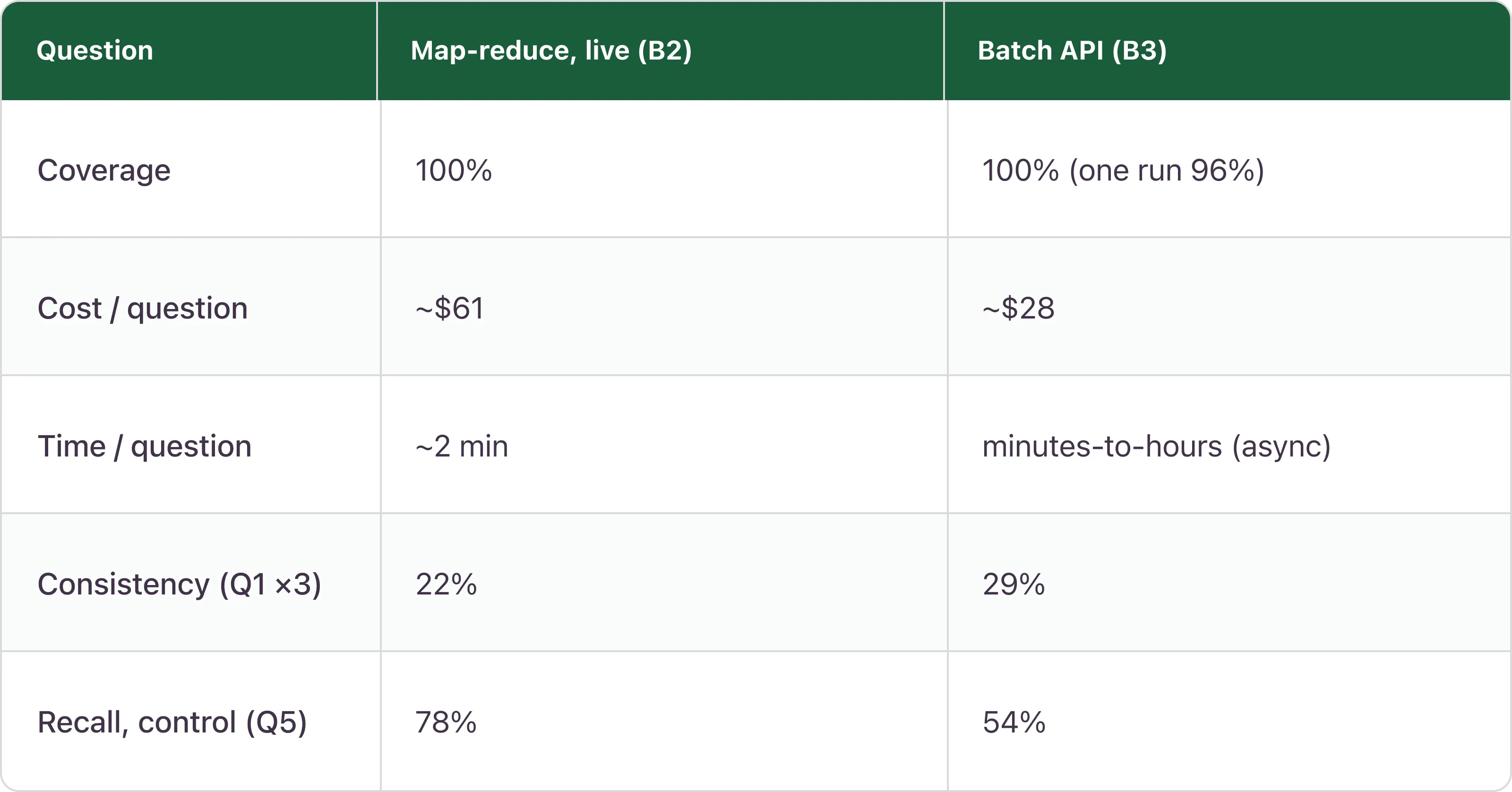
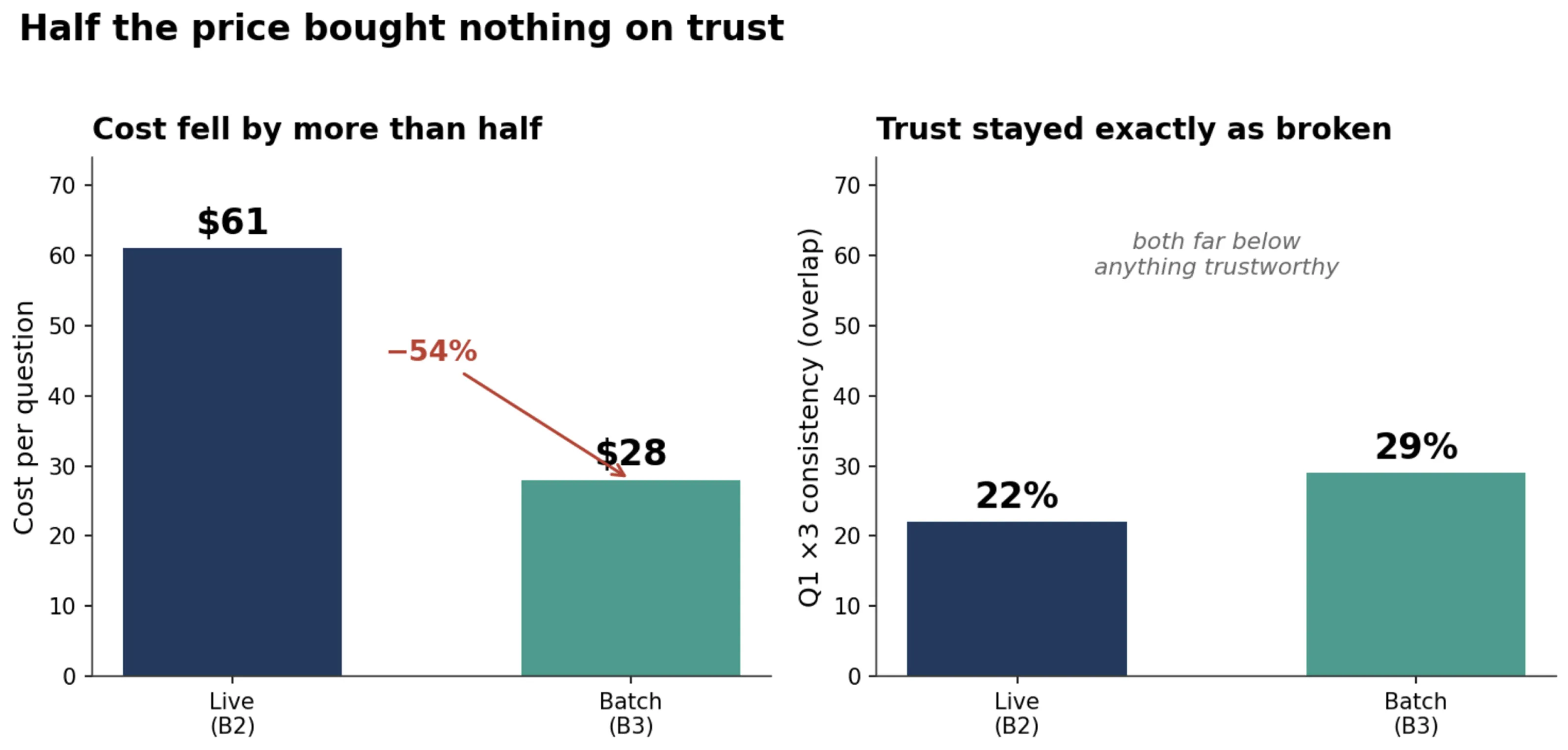
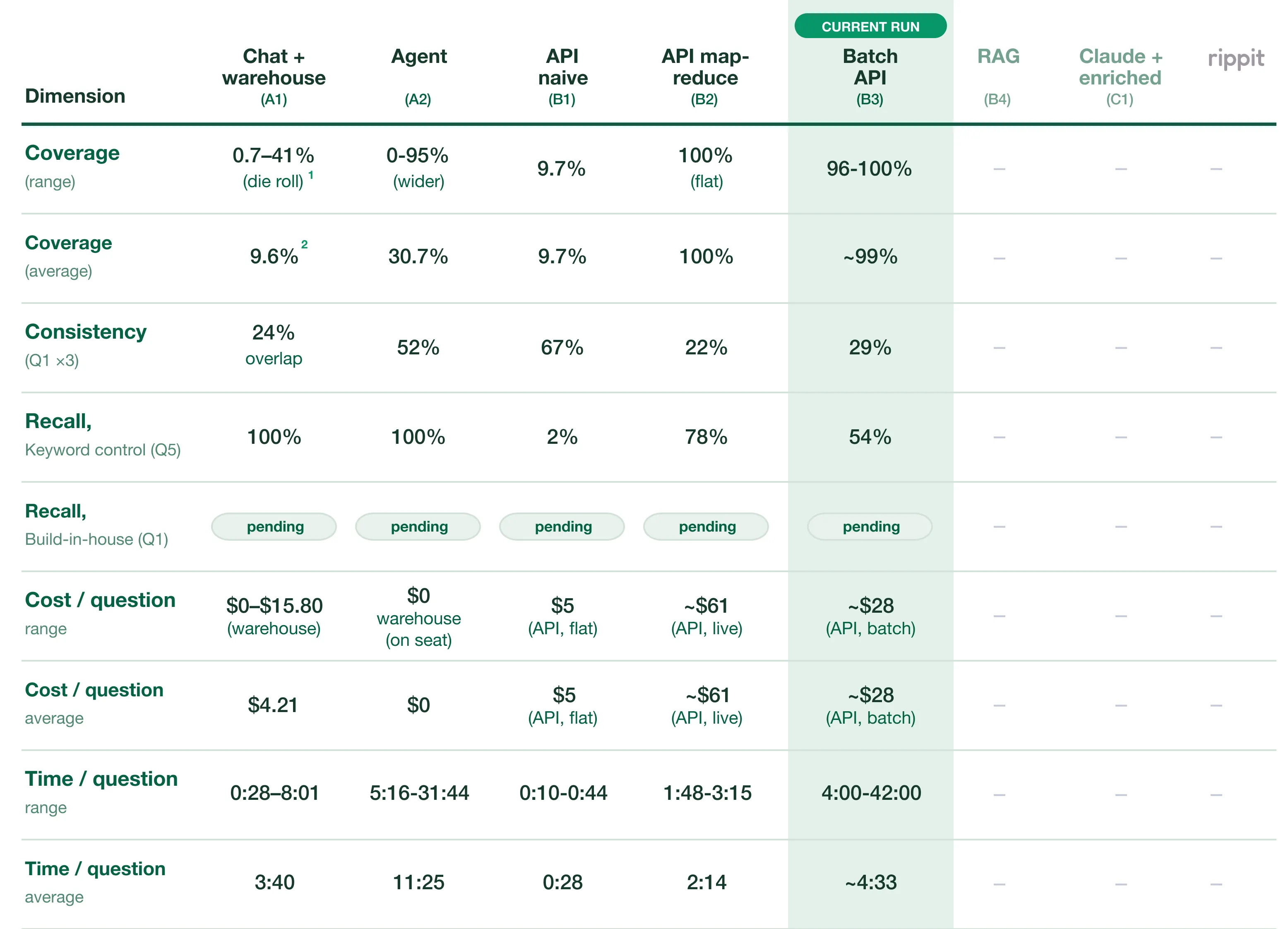
It got to full coverage, and it cost about $61 a question.
It also had another problem: asked the same question three times, it handed back three different customer lists — only 22% overlap.
This run changes nothing about how Claude reads or analyzes the calls. Same model, same chunks, same prompts, same everything.
The one difference is delivery: instead of making the calls live, I hand them to Anthropic's Batch API. If I'm more concerned about price than time, then this would be the way to go vs. the prior run.
Price is the obvious knock on Part 4, and batch is the obvious fix. Relative to Part 4, the batch API holds everything constant except cost and time, so I can find out whether that 22% consistency was a fluke - or something else.



.webp)