The dream version is simple. Someone types a plain-English question — how are customers talking about us this month? which deals are slipping, and why? — and the system calls an LLM against the actual transcripts, on the fly, and hands back an answer.
All inside Snowflake. No extra infrastructure, no data leaving the building.
But before any of that, before Cortex reads a single word, I had to get the conversations into a shape so that the LLM could even analyze them.
Our conversations don't live in one tidy place. Sales calls come from Gong, support chats from Intercom. Both sync into Snowflake through Fivetran, but they land raw. And raw is a mess.
A Gong call isn't a transcript; it's hundreds of rows, one per spoken sentence, scattered across tables with speaker IDs and timestamps.
Intercom is the same idea in a different shape: each conversation is a pile of message "parts," wrapped in HTML, tagged by whether an agent, a customer, or a bot wrote them.
So before I could analyze anything, I had to do real data modeling.
Stitch the sentence rows back into one ordered transcript per call.
Label who's speaking, [agent] vs. [customer], so the model isn't guessing.
Strip the HTML out of the Intercom threads.
Force two completely different sources into one common shape: one row per conversation, one clean transcript field, and shared columns like account, date, and channel.
And join all of it back to Salesforce, so a question like "which deals are slipping" even knows what a deal is.
That's a stack of dbt models and a daily pipeline standing between raw data and the very first question. None of it is hard, exactly, but it's hours of work and design decisions that I had to make. The LLM can't read what I hadn’t cleaned yet.
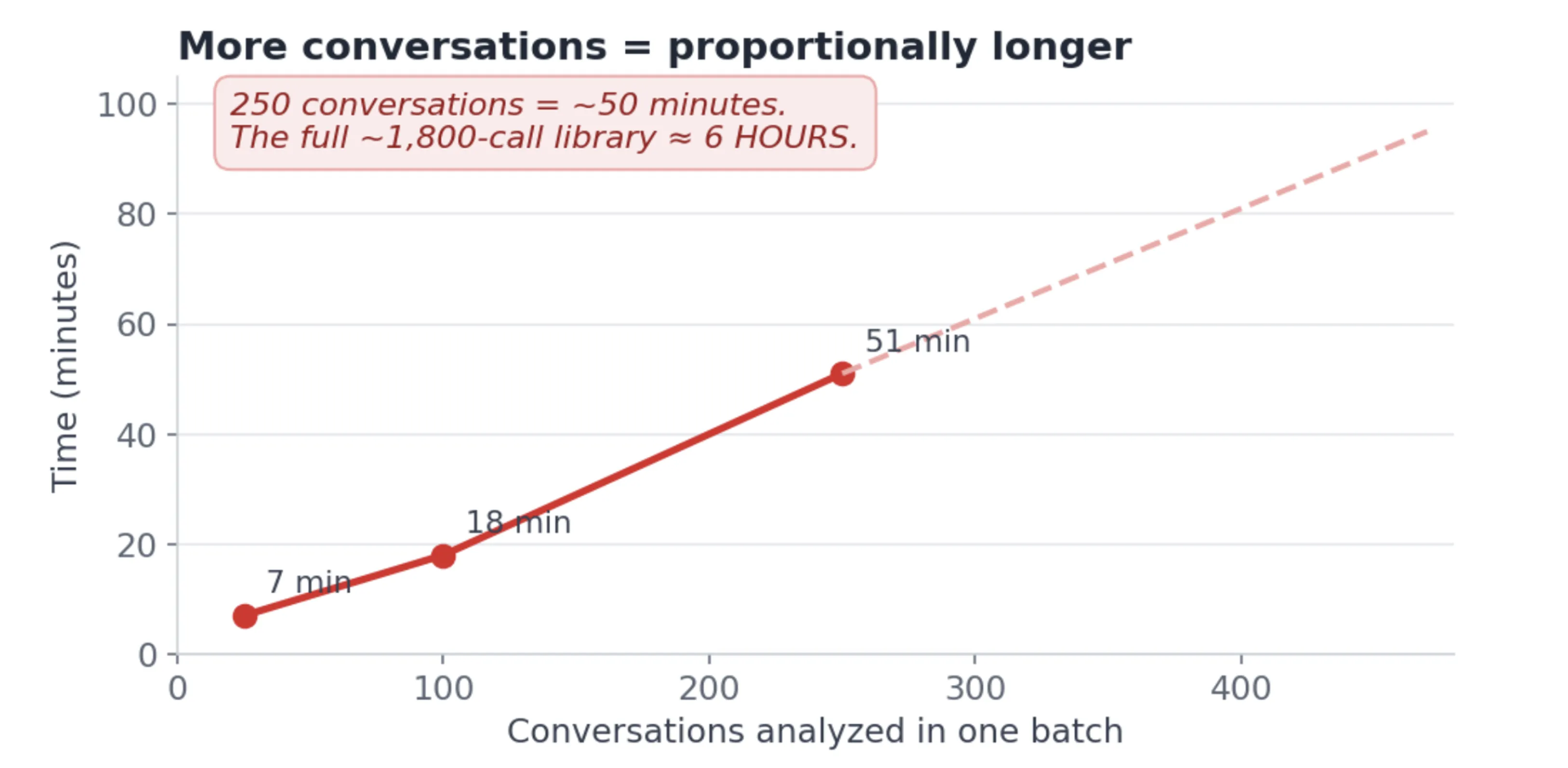
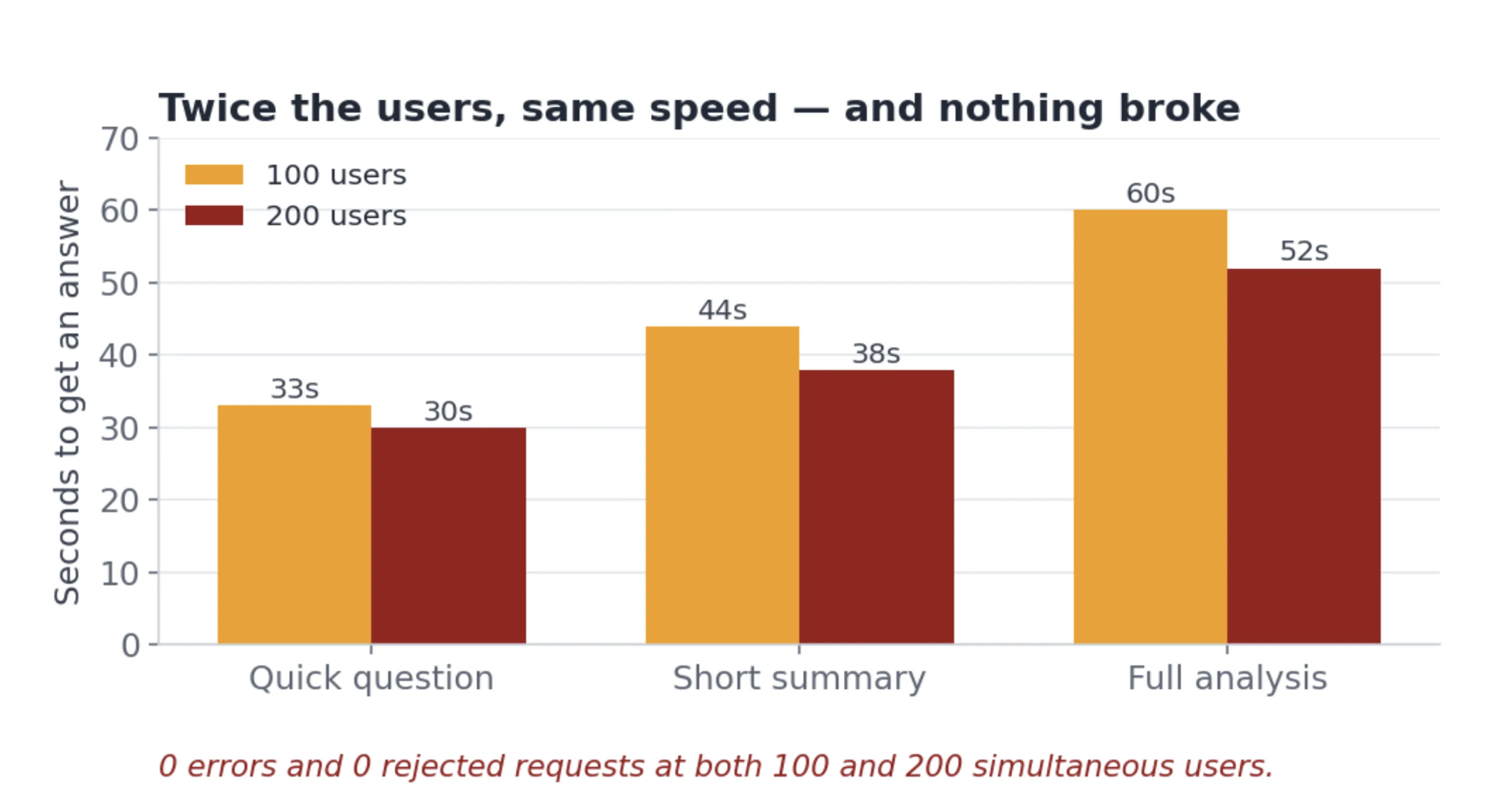
With the data finally in one clean, queryable place, I wired it up and started turning the dial: one user, then ten, then a hundred, then two hundred all asking at once.
I tracked how fast it answered, what it cost, and what fell over.
A few things surprised me.



.webp)